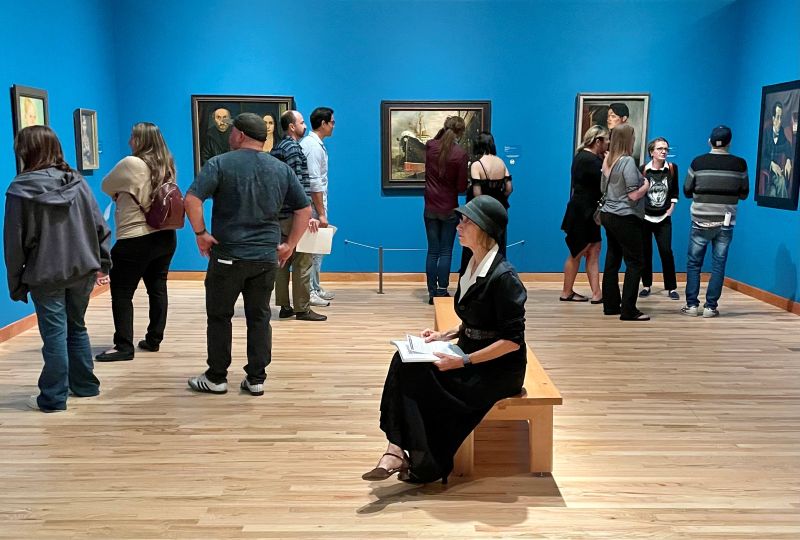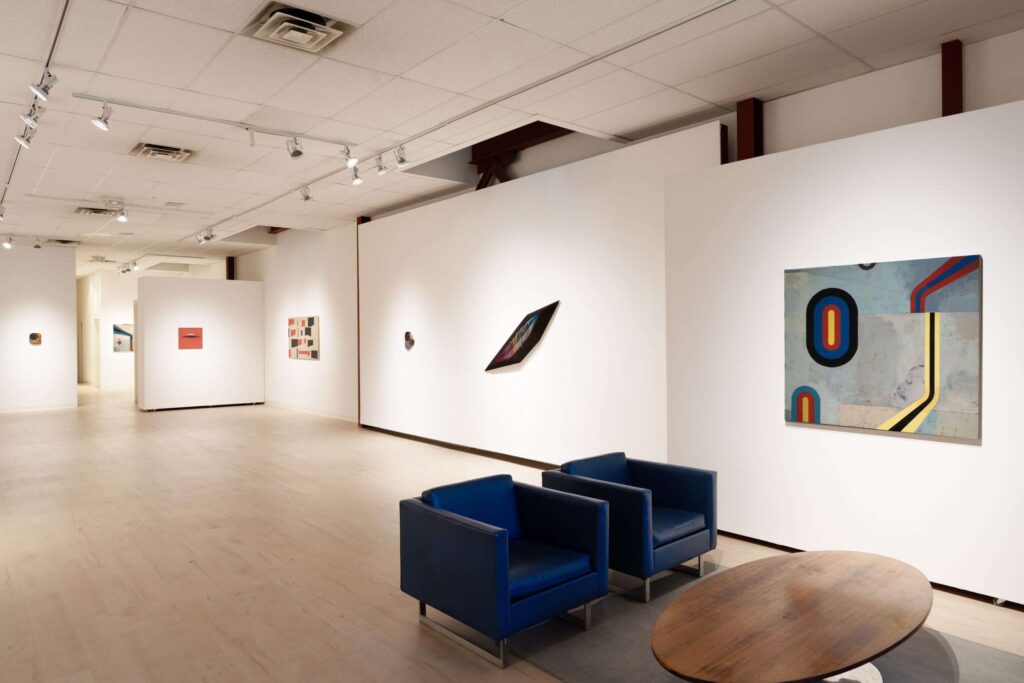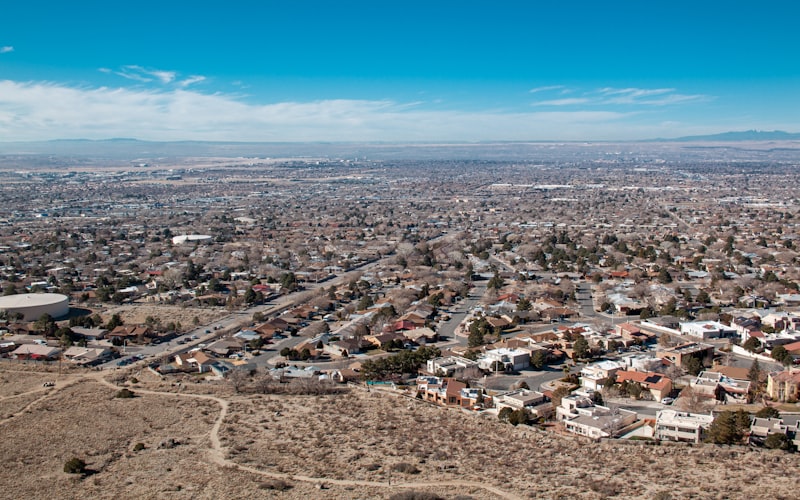
Albuquerque is New Mexico's largest city and its most overlooked art destination. While Santa Fe commands international attention and Taos retains its artist colony mystique, Albuquerque operates as the working city where artists actually live, cheaper, less scenified, and more authentically diverse than either of its neighbors to the north. The gallery scene reflects that reality: less polished than Santa Fe, more experimental, and often more interesting.
Old Town and the Museum District
Albuquerque's Old Town, the original Spanish colonial settlement, established in 1706 around a central plaza, is the tourist center and the location of several important cultural institutions. The Albuquerque Museum on Mountain Road holds a substantial permanent collection focused on New Mexico art and history, with particular strengths in 20th-century Southwestern painting and a rotating exhibition program that regularly brings significant traveling shows. The museum's sculpture garden, one of the largest in the state, wraps around the building and is free to enter.
Adjacent to the museum, the New Mexico Museum of Natural History and Science provides context for the geological and ecological forces that shaped the landscape Southwest artists have been painting for 125 years. Understanding the stratigraphy of the Rio Grande valley, the layers of volcanic rock, alluvial sediment, and ancient sea floor that give Albuquerque's mesa country its colors, adds a dimension to looking at landscape painting that no art history can provide.
Old Town itself hosts a cluster of galleries and studios, many oriented toward tourism but several with genuine quality. The Adobe Gallery specializes in historic and contemporary Pueblo and Diné pottery, with a scholarly approach to provenance and a staff that can speak knowledgeably about individual potters and lineages. For collectors of Pueblo pottery, it is one of the most reliable spaces in the state.
The Nob Hill Arts District
The Nob Hill neighborhood along Central Avenue (historic Route 66) is Albuquerque's most active contemporary arts district, with a concentration of galleries, studios, and alternative spaces that skews younger and more experimental than Old Town.
516 Arts is the most important contemporary arts nonprofit in Albuquerque, operating a large gallery space that has mounted exhibitions connecting local and international artists in ambitious, thematically rich programs. The organization has a particular commitment to socially engaged work and to artists from communities underrepresented in the mainstream art world, Indigenous, Latinx, working-class New Mexican artists whose work rarely reaches gallery walls.
Mariposa Gallery on Central Avenue shows contemporary craft and fine art with a strong emphasis on jewelry, ceramics, and works on paper by regional artists. The gallery has operated continuously since 1974 and has deep roots in the Albuquerque arts community.
The Railyards Market and Creative Economy
Albuquerque's Railyards, a large complex of historic industrial buildings adjacent to downtown, has become a hub for creative industry, including galleries, maker spaces, and the monthly Railyards Market, where artists and craftspeople sell directly to the public. The market, held on Sundays from May through October, is one of the best opportunities in the city to meet working artists and buy directly from them at prices that reflect studio rather than gallery economics.
The University of New Mexico
UNM's main campus in Albuquerque hosts the University Art Museum, with a permanent collection of over 30,000 works that includes significant holdings in photography, prints, and 20th-century American art. The museum mounts rotating exhibitions from the collection and traveling shows of consistent quality. The Tamarind Institute, also at UNM, is the most important center for collaborative lithography in the United States, the research and production facility that has worked with hundreds of major artists since its founding in 1970, and whose archives represent a critical chapter in American print history.
The Rio Grande and the Broader Context
Albuquerque sits in the Rio Grande valley, flanked by the Sandia Mountains to the east and the West Mesa's volcanic escarpment to the west. The light in Albuquerque, particularly in the late afternoon, when the Sandias turn to watermelon pink in a phenomenon the Tewa people called the Sandia effect, is among the most extraordinary in the Southwest, and it has drawn painters here since the early 20th century. The Balloon Fiesta in October, which fills the sky with hundreds of hot air balloons at dawn, has become something of an unofficial art event in itself, drawing photographers and painters from across the region.
Practical Notes
- The Albuquerque Museum is free on Sunday mornings (9am–1pm) and on the third Thursday of each month.
- 516 Arts is closed Monday and Tuesday; 516arts.org for current programming.
- The Railyards Market runs Sundays 10am–2pm, May through October; albuquerquerailyardsmarket.com.
- The International Balloon Fiesta runs the first full week of October and requires advance planning for accommodations, book six months ahead for the festival week.
- Albuquerque is 60 miles south of Santa Fe on I-25; a day trip combining both cities is easily done, though each deserves more time than a day allows.