Native American art is one of the deepest and most varied collecting fields in the American market, spanning centuries of material culture, an active and dynamic contemporary scene, and a range of price points from accessible to museum-quality. For collectors new to the field, and for experienced collectors expanding their focus, the Southwest is the essential geographic center: the Pueblo communities of New Mexico and Arizona, the Diné Nation, the Hopi Mesas, and the Zuni people have produced some of the finest art in the history of North America.
Understanding the Categories
Native American art encompasses several distinct collecting categories, each with its own market, authentication considerations, and institutional support.
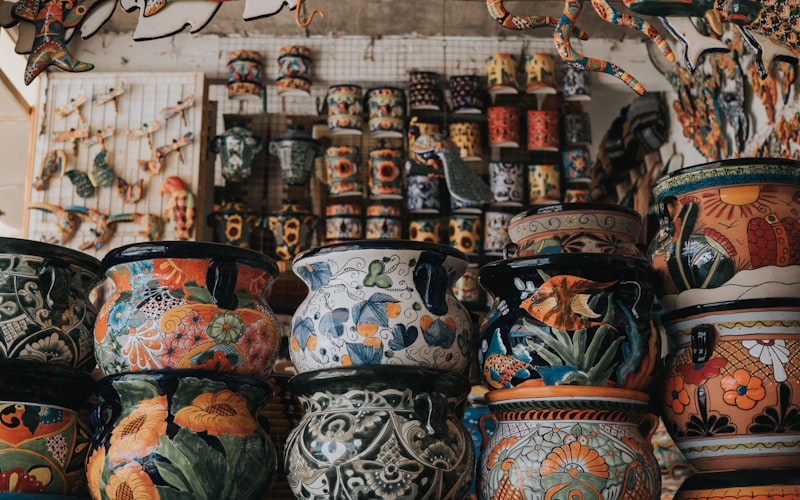
Pueblo pottery is one of the great art forms of the Southwest, with a tradition stretching back over a thousand years and an active contemporary practice producing work that commands significant prices at auction and in galleries. The black-on-black ware pioneered by María Martínez of San Ildefonso Pueblo in the early 20th century is the best-known tradition, but virtually every Pueblo community maintains distinctive ceramic styles. Santo Domingo, Acoma, Laguna, Hopi, Jémez, and Cochiti each have recognized pottery lineages. Major potters by established families, the Martínez, Gutierrez, Tafoya, and Nampéyo lineages among them, command prices from several thousand to over $100,000 for exceptional historical pieces.
Diné weaving is another major field, with a tradition that extends from the Classic period (1650–1865) through the Transitional, Regional, and contemporary eras. The finest historic Diné textiles, particularly the First Phase Chief Blankets and the pictorial rugs of the late 19th century, appear at major auction houses and command prices in the tens of thousands. Contemporary weavers continue the tradition, and their work is sold through galleries in Santa Fe and Scottsdale and directly through the Diné Nation's Navajo Arts and Crafts Enterprise.
Southwest jewelry, particularly the turquoise-and-silver work developed collaboratively by Diné, Zuni, and Hopi artisans, is the most accessible entry point into the field. Contemporary jewelry by established makers can be found from several hundred to several thousand dollars, while historical pieces by documented makers command premium prices in the specialty market.
Contemporary Native American fine art, painting, sculpture, printmaking, photography, and installation by enrolled members of Indigenous nations, is a field that has grown dramatically in institutional visibility over the past three decades. Artists like Jaune Quick-to-See Smith, Rose Simpson, Cannupa Hanska Luger, and Wendy Red Star have built international reputations and command prices commensurate with their standing in the broader contemporary art world.
Key Institutions
The Heard Museum in Phoenix is the essential institutional resource for collectors, the finest museum collection of Native American art in the country, with scholarly staff, a research library, and the annual Guild Indian Fair and Market that brings hundreds of artists to exhibit and sell. The Heard's authentication resources and educational programming are invaluable for new collectors.
The Millicent Rogers Museum in Taos holds a world-class private collection now open to the public, the most concentrated survey of Pueblo pottery and Diné weaving in any single institution, providing the kind of comparative context that is otherwise only available in major research museums.
The Wheelwright Museum of the American Indian in Santa Fe focuses on Diné art and culture, with a strong contemporary programming record and a gift shop that carries work by emerging Diné artists at accessible prices. The museum's annual auction is a significant market event.
Where to Buy
The most authentic purchasing contexts for Native American art are direct-from-artist sales at markets and fairs. The Santa Fe Indian Market (third weekend of August) is the most important annual event, drawing over 1,000 artists from across North America for a juried exhibition and sale on the Plaza. The Heard Museum Guild Indian Fair and Market (first weekend of March in Phoenix) is the second most significant event. Both events offer the opportunity to meet artists, understand their work in the context of their community, and buy with confidence in authenticity.
Established galleries specializing in Native American art provide a different kind of access, a curated selection, ongoing relationships with artists, and the kind of institutional knowledge that helps collectors build focused collections. Medicine Man Gallery in Scottsdale and The Adobe Gallery in Albuquerque are among the most respected dealers in the Southwest market.
Authentication and the Law
The Indian Arts and Crafts Act of 1990 makes it a federal crime to sell non-Native-made art as Native American. Despite this, misrepresentation persists in tourist markets. Protect yourself: buy from established galleries or at juried markets where artists must document their tribal enrollment, ask for written receipts that identify the artist by name and tribal affiliation, and learn to recognize the hallmarks and signatures of individual makers.
Practical Notes
- Register for Santa Fe Indian Market buyer cards through SWAIA (swaia.org); early access cards allow purchasing before the market opens to the general public.
- The Heard Museum's library and archives are open to researchers by appointment; heardmuseum.org.
- For authentication questions on Diné weaving, the Navajo Nation Museum in Window Rock, Arizona, is an authoritative resource.
- AskArt.com and Invaluable.com maintain auction records for major Native American artists, essential for understanding market values before making significant purchases.


