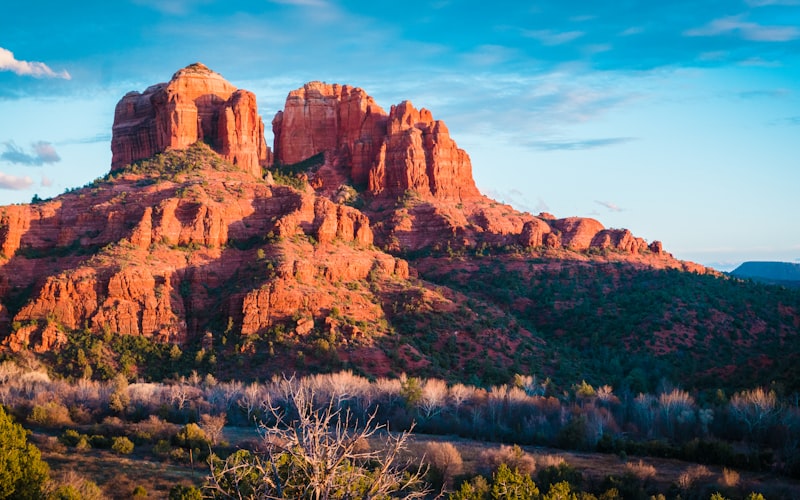
Sedona sits in a red rock canyon at the junction of Oak Creek and the Mogollon Rim, two hours north of Phoenix and 30 minutes south of Flagstaff. The landscape is theatrical, sandstone buttes rising 1,000 feet from the valley floor, streaked in iron oxide reds and oranges that shift color with the hour. Artists have been coming here since the early 20th century, drawn by the same thing: light that does things nowhere else quite replicates.
Tlaquepaque Arts and Shopping Village
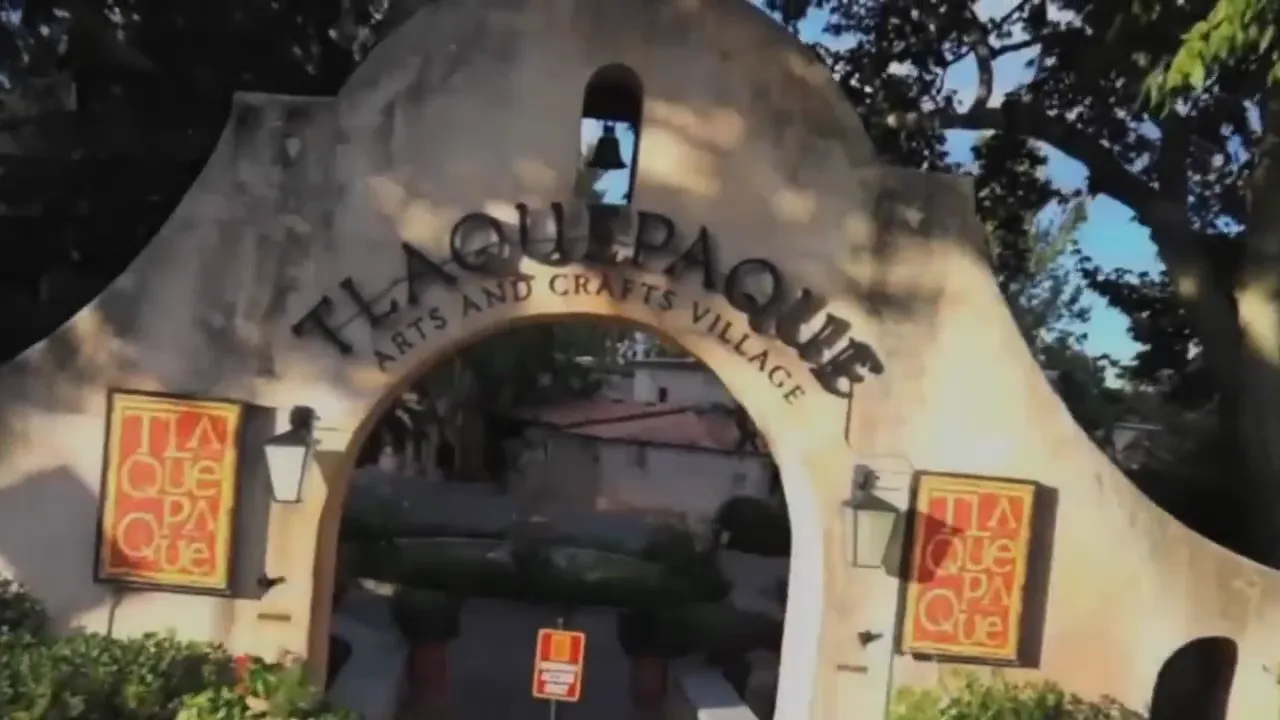
The center of Sedona's gallery scene is Tlaquepaque, a labyrinthine complex of adobe courtyards and passageways modeled on a Mexican artisan village, built in 1971 by Abe Miller on the banks of Oak Creek. Despite the tourist infrastructure around it, Tlaquepaque houses some of the best galleries in northern Arizona.
Kuivato Glass Gallery is one of the finest art glass destinations in the Southwest, showing large-scale blown and kiln-formed works from artists across the country. The quality of curation is consistently high, and the range, from delicate vessels to monumental sculptures, is impressive for a space this size.
El Prado Galleries anchors the complex with a broad survey of contemporary Western and Southwestern painting and sculpture. The roster includes established names alongside emerging regional artists, and the gallery maintains serious relationships with its artists rather than rotating generic work through the walls.
Lanning Gallery occupies one of Tlaquepaque's finest spaces and focuses on representational painting, landscapes, figurative work, and still life, with a strong emphasis on technical accomplishment. This is the gallery for collectors who care about craft.
Uptown Sedona
The Uptown district, running along AZ-89A through central Sedona, has its share of tourist-oriented shops but also several galleries worth seeking out. Exposures International Gallery of Fine Art is one of the largest galleries in the Southwest, with over 3,000 works across a sprawling space on the main strip. The breadth is remarkable: paintings, sculpture, ceramics, jewelry, and glass from hundreds of artists. It can feel overwhelming, but the depth of inventory means patient visitors always find something.
Goldenstein Gallery on AZ-179 takes a more edited approach, focusing on a smaller roster of painters whose work engages seriously with the Sedona landscape. The gallery represents artists who actually live and paint in the area, which gives the work a site-specific credibility that distinguishes it from generic Southwestern imagery.
The New Frontiers District and Outlying Galleries
Sedona has been spreading beyond its original commercial corridor, and some of the most interesting gallery activity is now found in the quieter village of Oak Creek and along the Chapel Road corridor near the Chapel of the Holy Cross. Azadi Southwest Rugs and Fine Art specializes in tribal textiles and jewelry alongside painting, serving collectors who understand that Diné and Pueblo weaving belongs in the same conversation as any fine art medium. The gallery's knowledge of textile provenance and authenticity is exceptional.
Plein Air and the Landscape Tradition
Sedona has one of the most active plein air painting communities in the country. The Sedona Plein Air Festival, held each October, brings 50 to 60 painters from across the United States for a week of outdoor painting followed by an exhibition and sale. Attending the festival gives collectors direct access to work made on-site, often at significantly lower prices than gallery work, and provides a rare opportunity to meet and watch the artists work.
Throughout the year, you can often find painters set up along Schnebly Hill Road, at Cathedral Rock vista, and along the Verde Valley School Road, a reminder that the tradition of painting this landscape in real time, which Maynard Dixon and others established in the early 20th century, continues without interruption.
Beyond the Galleries: Art in Context
The Sedona Arts Center, founded in 1958, remains the organizational hub of the local art community, hosting rotating exhibitions, workshops, and community events. The permanent collection is modest but the programming is consistent, and the center's building, a historic WPA-era structure, is worth a look. The Sedona Heritage Museum provides historical context for the area's art colony origins, with archival photographs and documentation of the early painters who established the tradition.
Practical Notes
- Tlaquepaque galleries are generally open 10am–5pm daily; individual galleries vary.
- The Sedona Plein Air Festival runs in mid-October; check sedonapleinairfestival.com for dates.
- The Red Rock Pass (purchased at trailheads) is required for parking at most scenic overlooks and trail access points.
- Spring (March–May) and fall (September–November) are the best times to visit; summer temperatures exceed 100°F and the town is extremely crowded.
- From Phoenix, take I-17 north to AZ-179; from Flagstaff, take AZ-89A south through Oak Creek Canyon, one of the most beautiful drives in Arizona.